

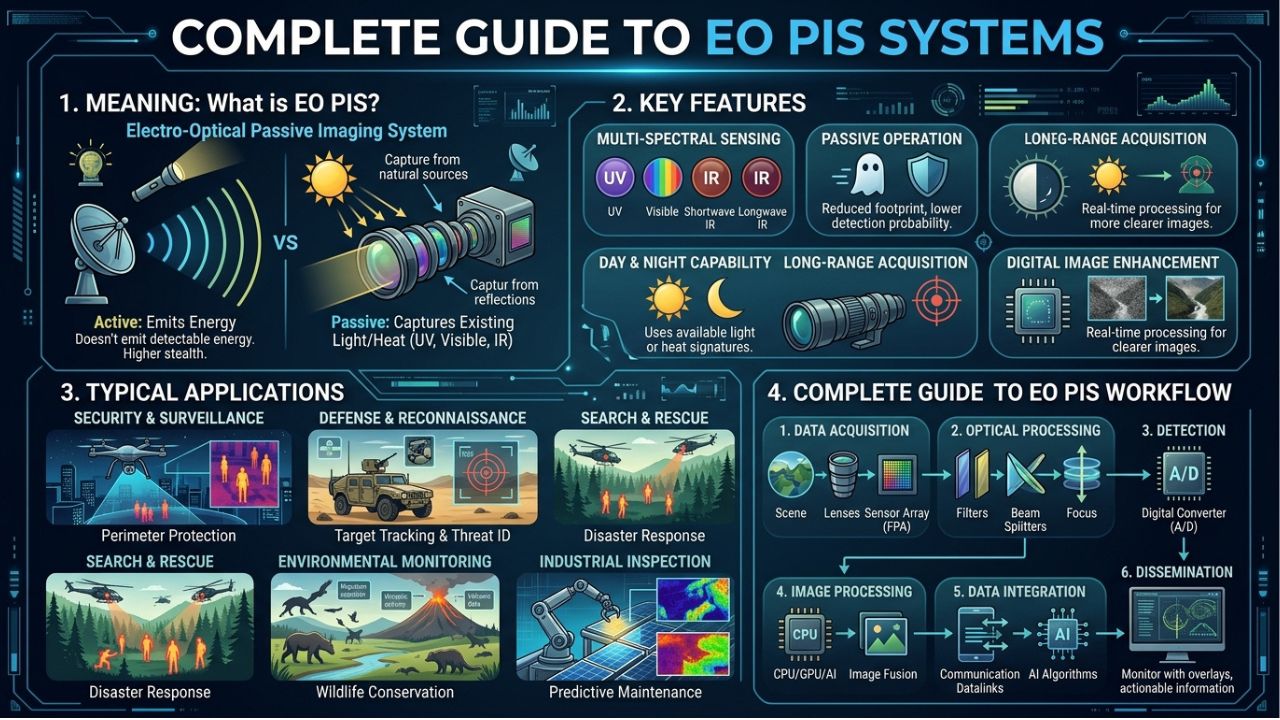
EO PIS is a modern system concept used in business and operational environments to improve efficiency, data management, and overall workflow organization. In simple terms, EO PI S refers to a structured information and process system that helps organizations manage tasks, automate operations, and improve decision-making. As businesses continue to adopt digital solutions, EO PI S has become increasingly important for improving productivity and reducing manual effort. This article provides a complete guide to EO P IS, including its meaning, features, benefits, applications, challenges, and future scope.
What is EO PIS?
EO PI S can be understood as a structured operational and information system designed to collect, process, and manage business data in a centralized environment. It helps organizations streamline their processes by integrating different functions into one unified system.
In practical use, EO PI S allows businesses to handle data such as sales, inventory, employee records, customer information, and financial reports in an organized way. Instead of relying on separate tools, EO PI S brings everything together for better control and visibility.
EO PI S is widely used in industries where accuracy, speed, and efficiency are important for daily operations.
Key Features of EO PIS
EO P IS includes several important features that make it effective in modern business environments. One of the main features is automation, which reduces the need for manual data entry and repetitive tasks.
Another key feature is real-time processing. EO PI S updates information instantly, allowing users to access the latest data whenever needed.
Centralized data management is also a major feature. All information is stored in one system, reducing confusion and improving coordination between departments.
EO PI S also includes strong security features such as user authentication, data encryption, and access control to protect sensitive information.
Additionally, EO P IS is scalable, meaning it can be used by small businesses as well as large enterprises without losing efficiency.
How EO PIS Works
EO P IS works by integrating different business functions into a single system. It begins with data collection, where information is gathered from various sources such as sales systems, employee inputs, or customer interactions.
Once collected, the system processes the data using predefined rules or automated algorithms. This step converts raw data into structured and meaningful information.
After processing, EO P IS generates reports, dashboards, and analytics that help users understand business performance.
Finally, the system continuously updates data in real time, ensuring that all information remains accurate and up to date for decision-making.
Benefits of EO PIS
EO P IS offers numerous benefits that improve business operations and efficiency. One of the biggest benefits is increased productivity, as automation reduces manual workload.
Another benefit is improved accuracy. By minimizing human error, EO PI S ensures more reliable data and reporting.
EO PI S also enhances decision-making by providing real-time insights and detailed analytics.
Cost efficiency is another advantage, as businesses can reduce operational expenses by automating tasks and optimizing resources.
Additionally, EO PIS improves communication between departments by ensuring all teams work with the same updated information.
Applications of EO PIS in Different Industries
EO PIS is used across various industries due to its flexible structure and wide functionality.
In retail, EO PIS helps manage inventory, track sales, and analyze customer behavior.
In healthcare, it is used for patient record management, billing systems, and appointment scheduling.
In education, EO PIS supports student data management, attendance tracking, and academic reporting.
In logistics and supply chain, EO PIS helps monitor shipments, manage warehouse operations, and optimize delivery routes.
In corporate environments, EO PIS is used for HR management, financial reporting, and performance tracking.
Challenges of EO PIS
Despite its advantages, E O PIS also comes with certain challenges. One of the main challenges is high implementation cost, which can be difficult for small businesses.
Another challenge is system complexity. Employees may require training to fully understand and use the system effectively.
Integration with older systems can also be difficult, especially in organizations that rely on legacy software.
Data security risks are another concern if proper safeguards are not implemented.
Finally, technical failures or downtime can temporarily disrupt business operations.
Future of EO PIS
The future of E O PIS is closely linked to advancements in technology such as artificial intelligence, cloud computing, and automation.
Future E O PIS systems are expected to become more intelligent, offering predictive analytics and automated decision-making features.
Cloud-based E O PIS platforms will allow businesses to access data from anywhere, improving flexibility and remote operations.
As digital transformation continues across industries, E O PIS is expected to become a standard tool for efficient business management.
Conclusion
E O PIS is a powerful and structured system designed to improve business efficiency, data management, and operational control. It helps organizations automate processes, reduce errors, and make better decisions.
With applications across retail, healthcare, education, logistics, and corporate environments, E O PIS has become an essential part of modern business systems. Despite some challenges, its long-term benefits make it highly valuable.
As technology continues to evolve, E O PIS will play an even greater role in shaping the future of business operations.